How to Clean Composite Decking Without Damaging It
Learn how to safely clean composite decking without causing damage. Get expert tips for maintaining your deck’s look and longevity with minimal effort.

Why Cleaning Composite Decking Requires a Smarter Approach
Composite decking is prized for its durability, low maintenance, and long-lasting beauty. Unlike traditional wood, it doesn’t require constant staining, sealing, or sanding. However, even low-maintenance materials benefit from consistent care. Over time, your composite deck will inevitably face dust, pollen, food spills, mildew, and foot traffic that dulls its shine.
Many families instinctively turn to harsh chemicals or pressure washers in an attempt to “power through” the mess, but that can lead to permanent surface damage, voided warranties, and a deck that ages faster than it should. The key to preserving composite decking lies in using the right method—not necessarily the fastest or most aggressive one.
In this guide, you'll learn the step-by-step process for cleaning composite decking the safe way. From tools and cleaning solutions to stain treatments and seasonal tips, you’ll gain the knowledge you need to refresh your deck without compromising its integrity.
Step One: Remove Loose Debris Before Anything Else
Every great cleaning routine starts with preparation, and your deck is no different. Before introducing any water or cleaning agents, it’s important to sweep away loose debris. A traditional broom with soft bristles works best, or you can opt for a leaf blower if you're dealing with large amounts of leaves or pine needles.
The goal here isn’t just to make things look neater—it’s to ensure that dirt, twigs, pollen, and other organic matter aren’t ground into the composite surface during the cleaning process. Debris that’s left behind can become trapped in the grooves and textured layers of the boards, making cleaning more difficult later on and contributing to discoloration or even mildew growth.
Weekly sweeping may seem simple, but it’s one of the most effective long-term habits you can develop for composite deck maintenance. Over time, you’ll notice that your deck holds its original tone and finish longer simply because you’re not allowing grime to accumulate unchecked.
Step Two: Choose a Gentle, Effective Cleaning Solution
Once your deck is clear of loose material, it’s time to prepare your cleaning solution. This step is where many people make mistakes. Harsh degreasers, bleach-based products, or acid cleaners can compromise the structural integrity of composite decking by stripping protective layers, altering coloration, or leaving behind residue that attracts more dirt.

Instead, the safest and most effective approach is to use a mild detergent solution. A few drops of a gentle dish soap mixed with warm water in a large bucket will do the trick for general cleaning. If you're dealing with a brand-name composite deck, check whether the manufacturer recommends a specific cleaner. Approved composite-safe products are designed to lift dirt without harming the surface or altering its finish.
Before committing to a full scrub-down, test your solution in an inconspicuous corner of the deck. Watch for any cloudiness, fading, or surface texture changes. Once confirmed safe, you can proceed with confidence.
Step Three: Scrub Gently and With Purpose
With your soapy solution ready, it’s time to start cleaning the deck itself. Rather than using an abrasive pad or stiff brush, opt for a soft-bristle brush with a long handle. A brush that’s too harsh can create micro-scratches that dull the surface and invite future staining.
Start by dipping the brush into the solution and scrubbing in the direction of the decking grain. Focus more attention on high-traffic zones or visible discoloration, but avoid excessive pressure. What you’re doing here is dislodging the dirt and biofilm gently—not sanding the surface.
If you run into stuck-on grime or dried spills, don’t force it. Let the area soak in your cleaning solution for a few minutes and revisit it. Gentle persistence always wins out over aggressive scraping when it comes to composite materials.
Step Four: Rinse Immediately and Evenly
Once scrubbing is complete, it’s critical to rinse the deck right away. Don’t let the soap dry into the surface—it can leave a filmy residue or cause streaking. The best tool for rinsing is a simple garden hose equipped with a wide fan nozzle. A sweeping side-to-side rinse will help push dirt and suds away without pooling or pressure damage.
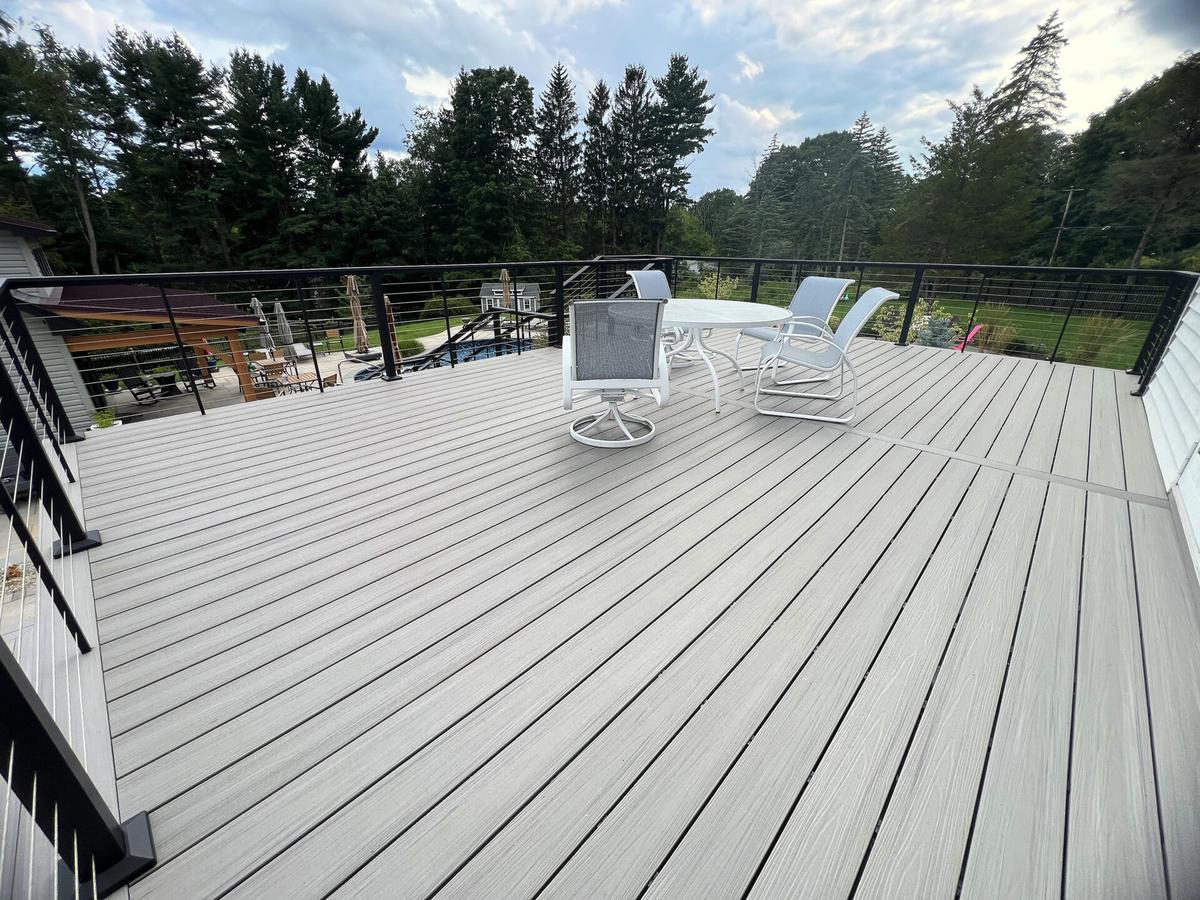
Avoid using pressure washers unless your decking brand explicitly allows it—and even then, never exceed 1,500 psi. Use a fan tip, keep the nozzle at least 12 inches from the surface, and move in broad, controlled motions. High-pressure streams, especially from zero-degree tips, can leave permanent etching or cause composite splintering.
Taking your time with the rinse ensures no cleaner or grime gets trapped in surface grooves, corners, or between boards. A thorough rinse also allows you to assess whether any spots need a second round of cleaning.
Step Five: Treat Problem Areas the Right Way
Even after a standard cleaning, you might notice certain trouble areas—like mildew stains, food grease, or shaded zones where moisture tends to linger. These spots may need a bit more targeted attention.
For organic stains or mildew, a diluted white vinegar solution (one part vinegar to three parts water) is both safe and effective. Apply the solution to the stained area and allow it to sit for up to ten minutes before gently scrubbing and rinsing again. For grease, a paste made of baking soda and water can be just as effective. Let it rest on the stain, scrub gently, and rinse thoroughly.
Avoid reaching for chlorine bleach or commercial degreasers unless you’ve confirmed compatibility with your specific decking material. The wrong chemical compound can void your deck’s warranty in seconds.
Step Six: Maintain to Prevent Future Build-Up
Now that your composite deck is clean, take a few simple steps to keep it that way longer. Start by trimming any trees or shrubs that drop debris or create damp, shaded areas. These can encourage mold growth and staining over time.
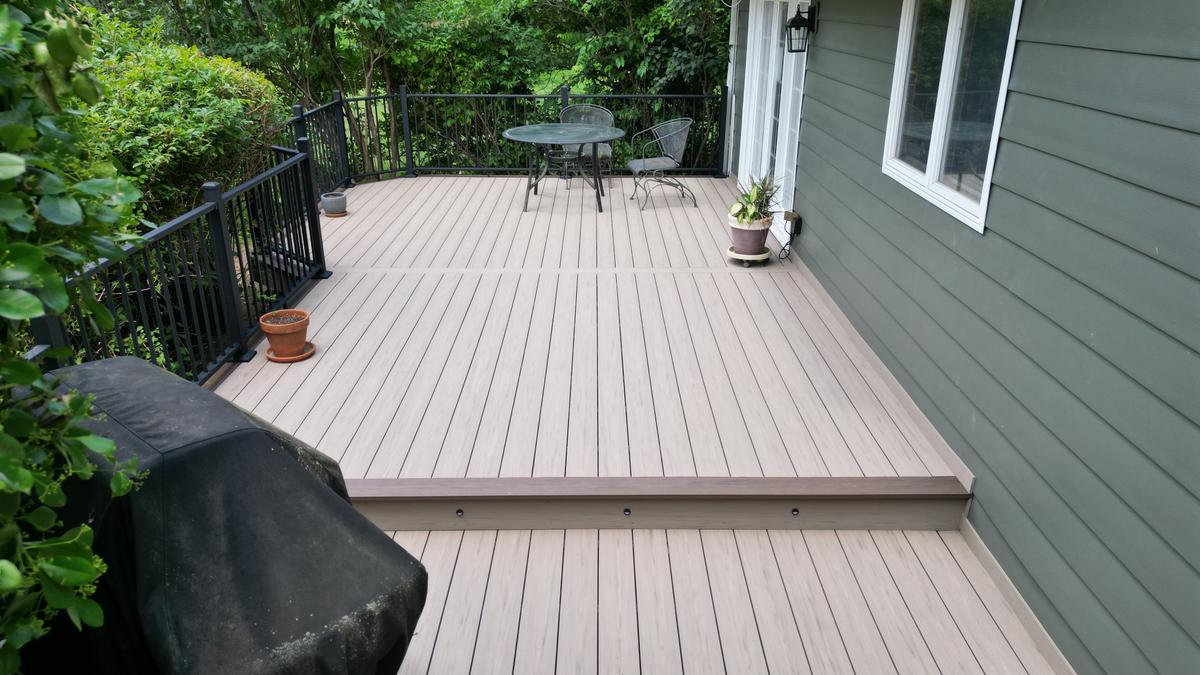
Move any planters or mats occasionally to allow the boards underneath to dry and breathe. Use outdoor rugs that are labeled as breathable or designed for use on composite decking. These won’t trap water or leave behind a faded shadow.
If you have a grill or outdoor kitchen, clean grease mats regularly and consider placing a tray or shield underneath the grilling zone to catch drips. Seasonal rinsing, especially during spring pollen blooms or after heavy rains, will keep your deck fresh between deep cleans.
FAQs
Q: When is it okay to pressure wash a composite deck? A: Only if your deck manufacturer allows it and you keep the pressure below 1,500 psi with a fan-style nozzle. Always maintain distance and test first on an inconspicuous area.
Q: Is bleach ever safe for composite decking? A: No. Bleach can cause fading, surface degradation, and even chemical warping. Stick with soap, water, vinegar, or manufacturer-approved cleaning products.
Q: How often should I clean my deck? A: Most composite decks benefit from a full cleaning two to three times a year. Light maintenance, like sweeping or rinsing, can be done weekly or monthly, depending on your environment.
A Clean Deck You’ll Love Longer
Caring for your composite deck doesn’t require fancy products or harsh methods—it just takes the right approach. With a little consistency, some mild cleaner, and a few hours of your time, you can refresh your entire outdoor living space without causing wear or damaging the surface.
At Upgryd, we believe outdoor living should feel effortless and lasting. That’s why we guide our clients on the best ways to protect and enjoy the spaces we help create. If your deck needs more than just a clean, we’re always here to help take it to the next level—safely, beautifully, and built to last.