Composite vs Wood Decking: What Changes After the First Year
How composite and pressure-treated wood decking compare on upkeep, surface, heat, expansion and warranty, and why the frame under both is the same decision.
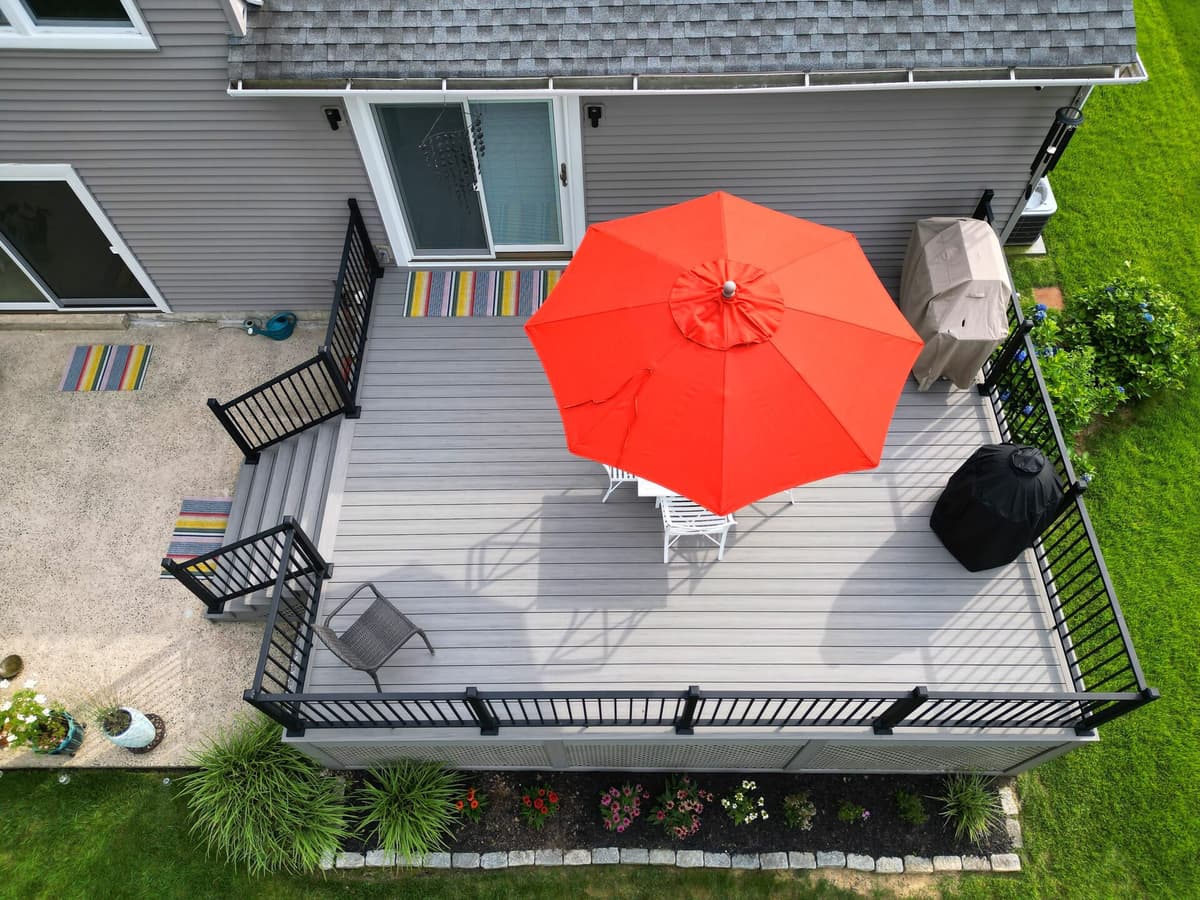
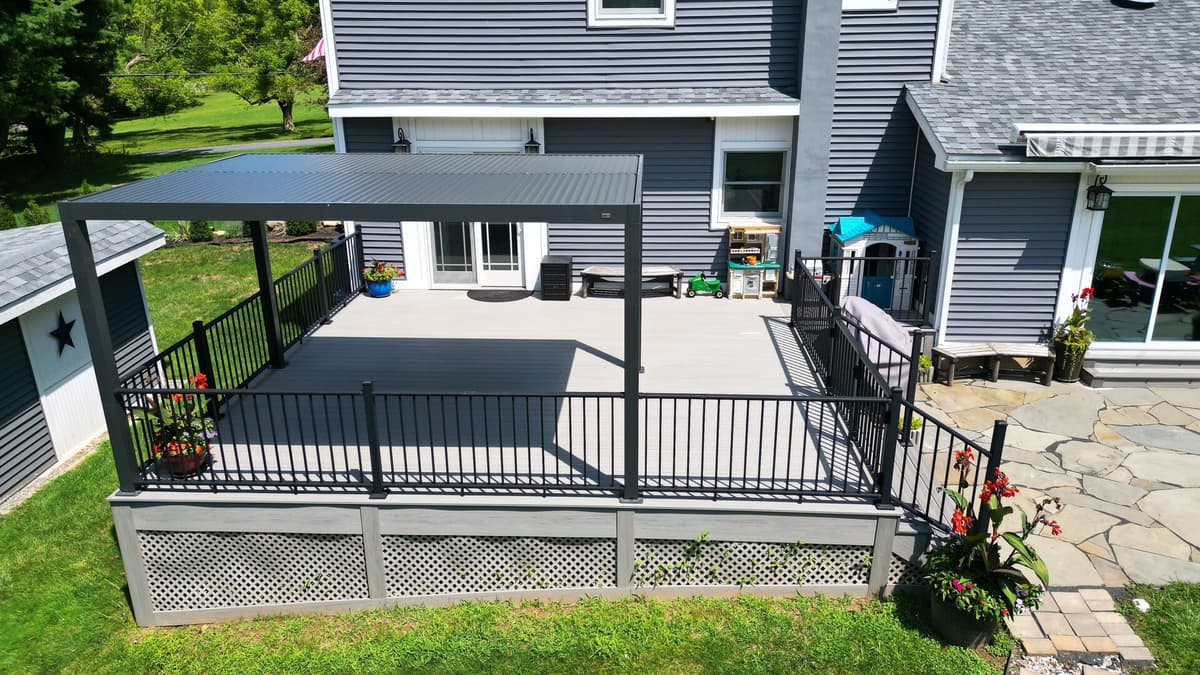
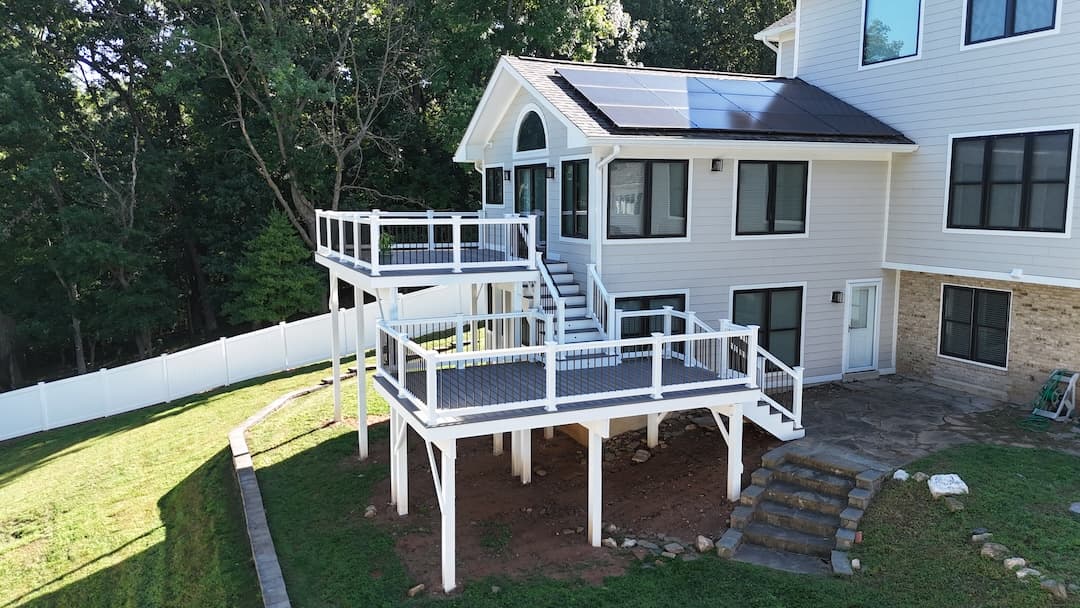
The choice between composite and wood decking is mostly a choice about what you want to do with your weekends in year three. The boards cost differently on day one. What differs after that is upkeep, how the surface ages, and what the warranty covers. Upgryd builds composite decks only, so we state our bias up front and give you the comparison on the points that decide it.
Upkeep
Wood decking needs periodic cleaning and a fresh coat of stain or sealer to slow weathering, and it needs that work on a schedule for as long as you own the deck. Composite needs washing. It does not need staining or sealing, which is the main reason people choose it.
The surface under bare feet
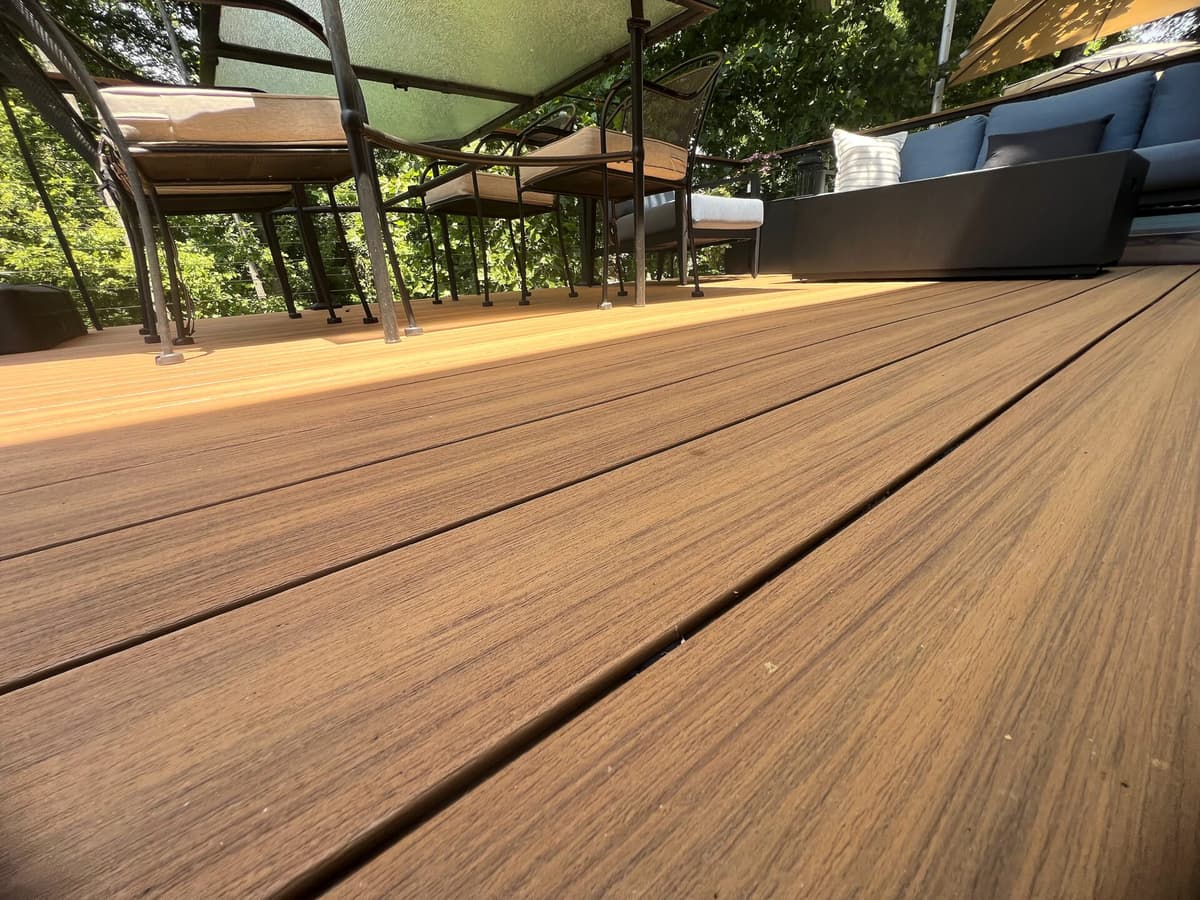
Wood boards can splinter, check and cup as they dry and weather. Composite boards have a manufactured surface that does not splinter, and the better lines are capped so that the surface resists staining and fading. Capped composite also resists rot and insect damage, which is the failure mode of wood boards in wet climates like New Jersey and Pennsylvania.
Heat
Any deck surface gets hot in direct sun, and darker colors run hotter than lighter ones. This is true of composite and of wood. If your deck faces south or west with no shade, put a sample of the color you like in the sun for an afternoon before you choose it. Color is the control you have over surface temperature.
Expansion
Composite boards expand and contract with temperature, so manufacturers specify gap spacing at the board ends and sides, and installers set it for the temperature on the day of installation. Wood moves with moisture instead. Both need correct spacing. The point for a buyer is that the installer's method matters as much as the board.
Warranty
Composite manufacturers back their boards with long limited warranties. Deckorators, for example, carries a 25-year manufacturer warranty on its decking. How a wood deck ages depends mostly on upkeep. Read the warranty terms for the specific line, and ask the builder about labor separately: the manufacturer covers the board, not the installation.
The frame is the same decision either way
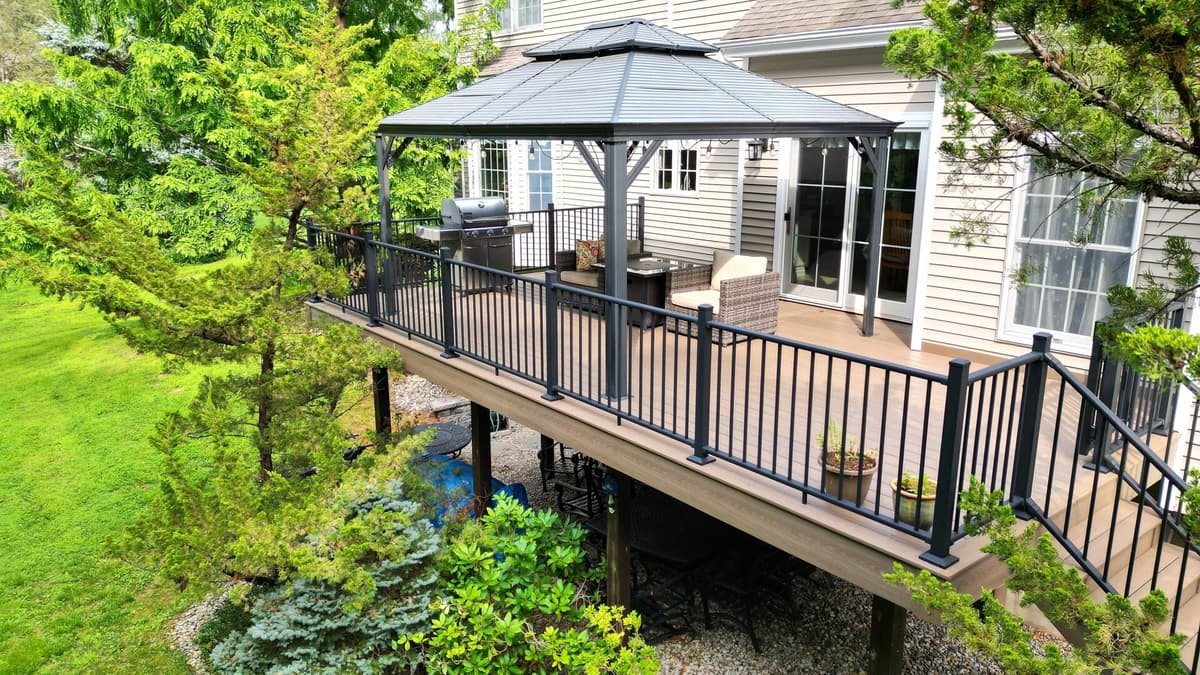
Both wood and composite decks sit on a pressure-treated frame, and the frame is where the deck is won or lost. Boards on top can last decades while a poor frame fails underneath them. This is why Upgryd frames every deck with #1 grade pressure-treated lumber, adds butyl joist tape on the joists, and builds a picture frame around the perimeter to protect the rim joist. If you replace wood boards with composite on an existing frame, the frame has to be inspected and brought up to code first, which is what a deck resurface does.
What it costs
A resurface shows how the two decisions separate. In Northampton, PA, a 14 by 16 deck kept its footprint and its sound footings, and everything above them was rebuilt in composite. The structure was judged sound; the surface was what had worn out. When the frame is sound, a resurface gets you the composite surface without the cost of a new frame. When it is not, the frame is rebuilt first, and that is where the extra cost sits.
Composite costs more up front and less to keep up. Wood costs less to install and more to maintain. The line item that decides the total is usually the size and height of the deck, not the board. Ask for a proposal with each material priced as its own line so you can see the difference for your deck.
Which one fits you
Choose wood if you want the lowest installed cost and accept the upkeep. Choose composite if you want to wash the deck and use it. If you already have a sound frame, a resurface lets you swap the boards without rebuilding the structure. See how a deck resurface works, or book a free in-home consultation and we will measure and price both options for your deck.